Empowerment of Women in the Poultry Industry of Mozambique
Poultry Cooperative in Vilankulos Gets a Slaughterhouse Upgrade
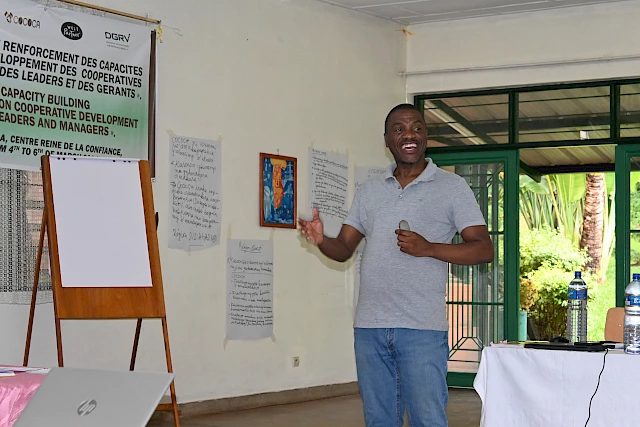
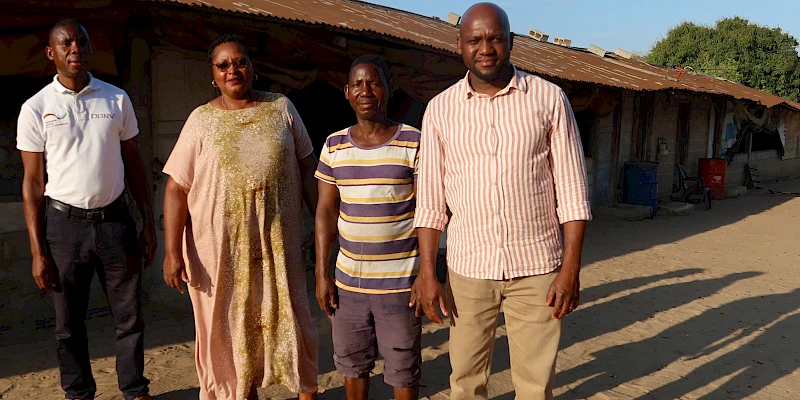
The regional project of the DGRV in Mozambique works with various partners across the country to strengthen cooperatives and sustainably support their members. One focus is on practice-oriented training for multipliers from government and private institutions, as well as direct support for cooperatives. Together with the district government of Vilankulos, members of the poultry cooperative Cooperativa de Avicultura de Vilankulo (COAV) were trained. The training showed impressively that COAV has significant economic potential but has not yet been able to supply larger buyers due to a lack of infrastructure and inadequate hygiene standards. This is precisely where the GESTE Foundation project stepped in.
The cooperative currently has 71 members, 60 of whom are women aged between 18 and 45. It produces approximately 45,000 chickens per month. However, slaughtering is still done as home slaughter, meaning required hygiene standards cannot be met. For this reason, marketing to large buyers such as hotels, restaurants, or the nearby SASOL gas plant is limited. The Vilankulos district, about eleven hours' drive north of the capital, is economically characterized by agriculture and tourism. A functioning local slaughterhouse would significantly boost regional value creation.
As part of the project, comprehensive training on cooperative and business topics is being conducted. The focus is on professionalizing organizational structures, imparting the fundamentals of good governance, business management knowledge, and market analysis methods. In addition, the construction and equipping of a poultry slaughterhouse is planned. This includes building a hygienically certifiable slaughterhouse and installing a cold storage room for products. These measures are intended to increase capacity to reliably supply large customers.
Participants also receive ongoing mentorship from the DGRV. This includes technical support, assistance in implementing quality standards, and strengthening cooperative structures with local authorities and markets. Through this structure, COAV is to be enabled in the long term to access new markets, achieve higher incomes for members, and become part of regional economic growth.