Start-Up Competition Strengthens Youth Entrepreneurship in Laos
Fostering Entrepreneurship and Cooperative Start-Ups Among Lao Youth
To open up new economic perspectives for young adults in Laos, the GESTE Foundation supported a project from October 2024 to December 2025 targeting students and young people up to age 35. The project fostered entrepreneurial skills and supported the establishment of cooperatives. The approach combined practice-oriented training at universities across the country with a nationwide start-up competition where young people could submit their business ideas and win start-up capital for implementation. Laos currently faces a major challenge: more and more young people are leaving the country. The ongoing depreciation of the Lao currency KIP, limited labor market opportunities, and targeted poaching by foreign employers – from Korea or Japan, for example – mean that young adults see few prospects. Universities and vocational academies report drastically declining enrollment and rising dropout rates. At the same time, many young Lao people want to realize their own business ideas but lack capital or assets. Interviews conducted by the DGRV at various locations make it clear: the issue is less about motivation than about starting opportunities and financial resources. This is precisely where the project funded by the GESTE Foundation stepped in.
At the heart of the initiative was a multi-stage approach combining qualification, innovation, and practical implementation. At several partner institutions, including the Banking Institute of the Bank of Laos, the National University of Laos, and the Faculty of Social Sciences in Vientiane, learning modules on cooperatives, business management, strategy development, and sustainable business planning were conducted. The content is based both on the national curriculum and on materials developed as part of a cross-border youth project of the DGRV. Students thus received concrete tools to develop viable cooperative models.
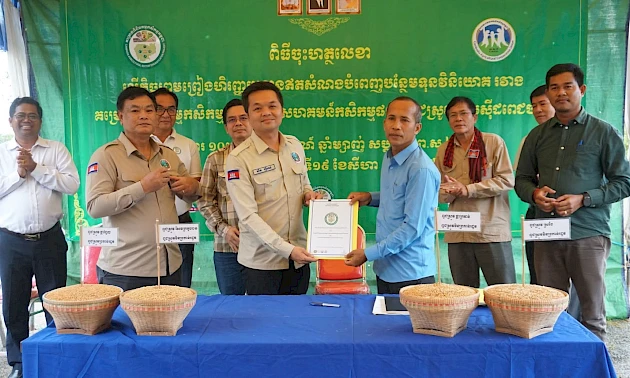
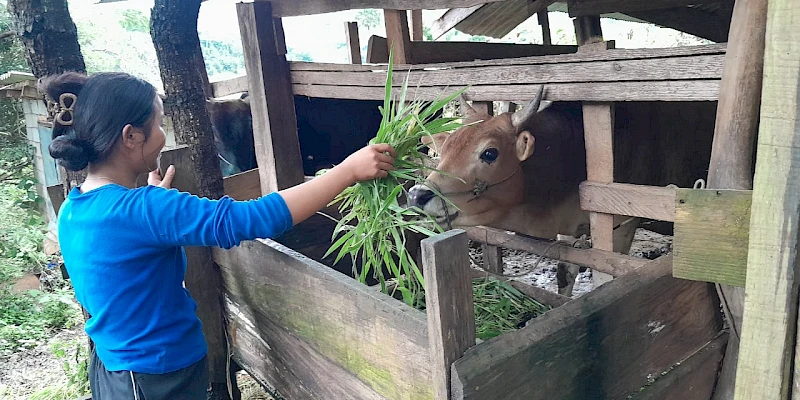
Building on the training, a nationwide competition was announced, conducted jointly with the participating educational institutions and supported by the Department of Agriculture Extension and Cooperatives (DAEC) for questions and guidance on registration processes. Students and young members of existing cooperatives could participate. The winning teams of the competition established cooperatives focused on mushroom cultivation, vegetable farming, tailoring, seed production, and livestock breeding. The selected projects received close support at launch. To ensure that the funded start-ups can continue to develop and address challenges early, they will continue to be supported through the DGRV's project work.